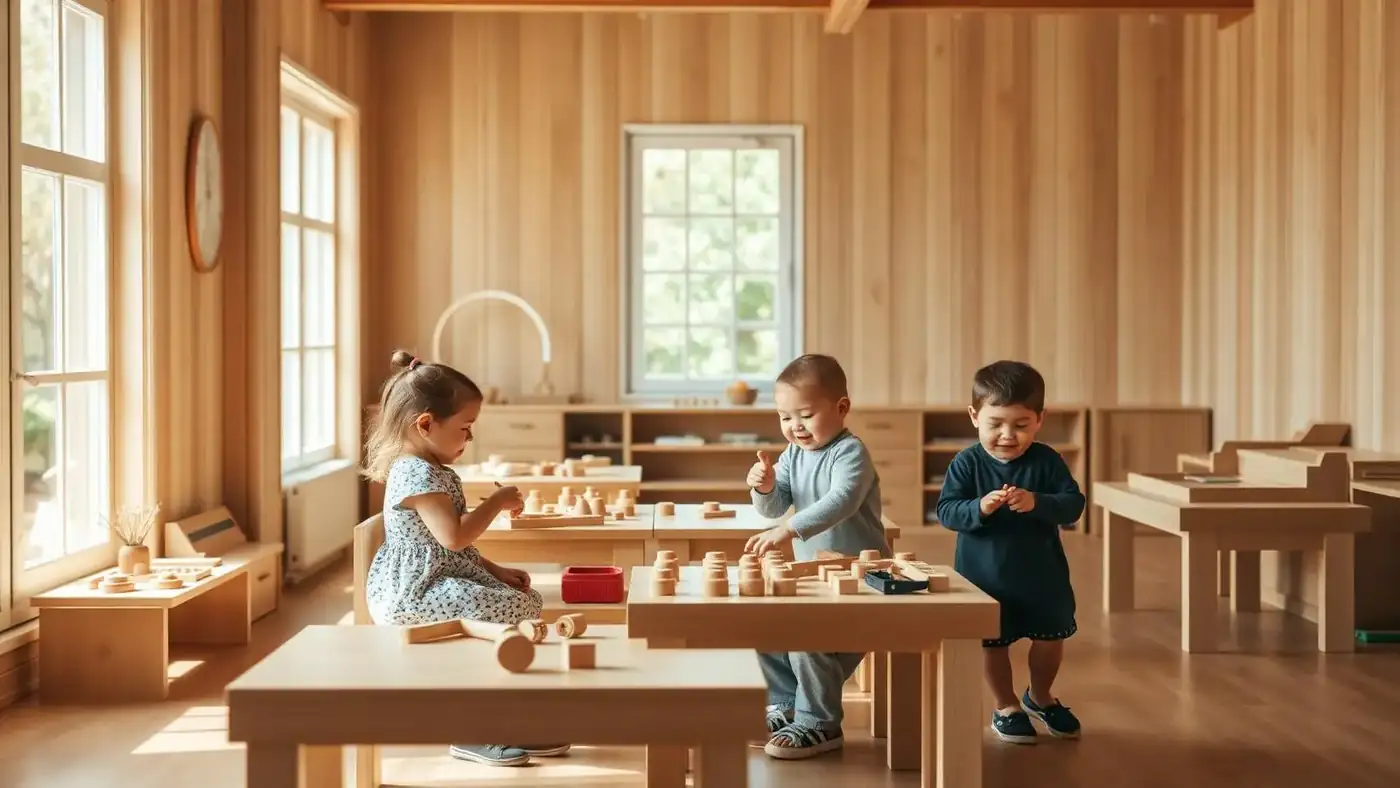
International preschools & early years: a calm, honest guide for families
Where the school journey actually starts, and where families make their first big call.
Quick Summary
- ·International preschools cover ages 2–6 and use a mix of Montessori, Reggio Emilia, EYFS, IB PYP early years, Waldorf and play-based models.
- ·Preschool choice often shapes which 'big' school you enter, many international primary schools recruit heavily from feeder preschools.
- ·Fees vary enormously, from USD 5,000 in Lisbon and Bangkok to USD 30,000+ in Hong Kong and Singapore.
- ·Quality is harder to externally inspect than at older ages, what matters most is the daily life: ratios, language, outdoor time and continuity of staff.
- ·Avoid choosing a preschool purely as a 'feeder', most children change schools at primary entry anyway, and a great early-years experience is the goal.
What the Preschools curriculum actually is
'International preschool' is an umbrella for English-medium (or bilingual) early-years settings serving expat and globally mobile families. There's no single dominant model.
The most common pedagogical models: Montessori (mixed-age classrooms, prepared environment, child-led work cycles), Reggio Emilia (project-based, atelier-led, strong documentation of children's thinking), British EYFS (statutory framework with seven areas of learning), IB Primary Years Programme early years (inquiry-led, transdisciplinary), and Waldorf/Steiner (rhythm-anchored, imagination-led, technology-light).
Many international preschools blend approaches. A school may follow EYFS as a regulatory framework but draw heavily on Reggio for the practice. Pure-model schools exist but are a minority.
Bilingual immersion preschools have grown rapidly in the last decade, particularly Mandarin-English in Asia and Western cities, French-English in Europe, and Spanish-English in Iberia and the Americas. The 50/50 model (half day in each language) is the most common.
How the programme is structured
Settling-in groups, often part-time. Focus on attachment, separation, and basic routines. Available in larger international preschools.
Half-day or short full-day programmes. Play-based with introduction to peer routines, language and motor development.
Typical entry year for international preschools. Full-day attendance is common; strong focus on social, emotional and language development.
The pre-primary year. Phonics, early numeracy, structured group work, and preparation for primary entry.
In US and many Asian systems, the official start of formal schooling. Often the first year inside a wider primary school.
Who Preschools suits, and who it doesn't
- · Families wanting English-medium or bilingual early years in a city without strong local provision.
- · Globally mobile families needing portable early-years experience that translates across countries.
- · Parents who value play, outdoor learning and rich language exposure over early academic acceleration.
- · Children who benefit from small-group, high-staff-ratio environments before larger primary settings.
- · Families convinced that early academic drilling produces long-term advantage, most international preschools deliberately delay formal academics.
- · Parents looking for the lowest-cost option in expensive cities, international preschools often cost as much or more per hour than primary schools.
- · Families confident in the local-language public system and not planning to leave the country.
What it actually costs
Early-years fees follow city economics more than curriculum. The same Reggio-influenced model can cost USD 6,000 in Porto and USD 30,000 in Hong Kong.
In Lisbon, Bangkok and Kuala Lumpur, strong international preschools typically run USD 5,000–12,000 per year for a full-day place. In Singapore, Hong Kong and Dubai, expect USD 15,000–30,000+ for the same hours. Switzerland, London and major US cities can exceed USD 35,000 at the premium tier.
Many preschools charge enrolment fees, deposits, and uniform/material fees on top of tuition. Some include lunches and after-school care; many don't. Always ask for an all-in number for a full-day, full-year place.
Subsidised early years exist in some markets, the Netherlands offers significant subsidies for low-income families even at international schools, and Nordic countries have universal subsidised systems. Investigate eligibility before assuming you need to pay full international rates.
University and life outcomes
Outcomes from preschool aren't measured in grades but in transitions: how smoothly children move into primary, and how confident they are as independent learners.
Strong international preschools produce children who are emotionally settled, comfortable with English (or both languages in bilingual settings), able to manage simple routines independently, and curious about the world. Academic readiness, letter recognition, early phonics, numeracy, comes naturally on top of these foundations rather than being drilled.
The biggest 'outcome' decision at preschool age is often the primary school. Many international primary schools recruit heavily from particular preschools, sometimes through formal feeder relationships, sometimes through informal community channels. Ask preschools for their primary destination patterns.
Research consistently shows that early-years quality matters most for socio-emotional outcomes, peer relationships, self-regulation, resilience, rather than later academic test scores. Picking a preschool primarily for academic acceleration tends to produce neither happier nor higher-achieving children long-term.
Choosing a Preschools school well
Visit during free play
Watching children at unstructured play tells you more than any curriculum document. Look for engaged, calm, communicative children.
Check staff-to-child ratios
Strong international preschools run 1:6 or better for ages 3–4 and 1:8 for ages 4–5. Lower ratios usually mean richer interactions.
Inspect outdoor and movement provision
Daily outdoor time is non-negotiable in serious early years. Tropical-city preschools should publish rainy-season indoor alternatives.
Ask about staff continuity
High turnover in preschool is corrosive, young children form attachments to their key adults. Ask the average tenure of lead teachers.
Understand the home-language stance
Some preschools embrace home-language use; others enforce English-only. Both can be excellent but the philosophy must match your family's.
Don't optimise purely for primary feeder routes
Most children change schools at primary entry anyway. A great early-years experience is the goal, not a guaranteed admissions ticket to one specific primary.
Where Preschools schools are strongest right now
Each guide below is a deep, honest read on the local Preschools landscape, fees, regulators, neighborhoods, and admissions timing.
Compare IB, British and American schools in Dubai. KHDA ratings, tuition from $4,000. Free human-reviewed shortlist by a real Dubai specialist.
Compare IB, British and American schools in Singapore. Tuition, waitlists, neighbourhoods. Free human-reviewed shortlist by a real Singapore specialist.
Compare international schools in Lisbon, Cascais and Porto. Tuition, D7/Golden Visa context, neighbourhoods. Free human-reviewed shortlist by a specialist.
Compare British, American and IB schools in Bangkok. Tuition, traffic-aware neighbourhoods. Free human-reviewed shortlist by a Bangkok specialist.
Compare IB, British and subsidised DSTC schools in Amsterdam. Tuition, expat neighbourhoods, waitlists. Free human-reviewed shortlist by a specialist.
Common mistakes families make with Preschools
- Choosing a preschool because it 'feeds' a target primary school, then discovering the preschool itself doesn't fit the child.
- Pushing for early academics, letter formation at 3, reading by 4, at the cost of play, movement and conversation.
- Underestimating the language adjustment for non-English-speaking children. Even great preschools take 3–6 months for full settling.
- Assuming all 'Montessori' or 'Reggio' settings are equal. Branding outpaces practice in many markets, visit and see for yourself.
- Picking a preschool too far from home. Long commutes wear young children out and reduce the lasting benefit of any school.
Tell us what your family needs
Reviewed by a real person. You'll receive a curated shortlist of Preschools schools, and, per the consent you give on the form, we share your details with those shortlisted schools so they can contact you directly.
Your International preschools & early years school shortlist
Tell us about your child in ~2 minutes. A real person reviews every submission and prioritises families with upcoming school starts.
- Human reviewed
- Global coverage
- Free for families
- Privacy-first
GDPR · consent-based. Your details are only shared with the schools on your shortlist.
International preschools & early years, common questions
Honest answers to the things parents most often worry about, timing, fit, privacy, and what happens the moment you hit submit.
- Advisor-reviewed
- Zero spam, opt-in only
- Reviewed by a real person
- In competitive cities (Singapore, Hong Kong, London), 12–18 months before your target start date is normal, sometimes longer for sibling priority. In most other cities, 3–6 months is enough. Check waitlist status before assuming.
- For most globally mobile families, yes. Children acquire languages most easily under age 6, and high-quality bilingual immersion produces strong outcomes in both languages without harming academic development. The key is genuine immersion, not just a few language lessons.
- Sometimes it helps; rarely is it decisive. Most international primary schools recruit from a wide pool. Sibling priority and assessment performance usually matter more than feeder status.
- Some exposure is normal; formal phonics at 3 is unusual in well-run early-years settings. The international research consensus is to keep formal academics light until around age 5.
- Montessori uses prepared environments with specific materials and mixed-age classrooms, children work largely independently within structured choices. Reggio is project-based, with teachers documenting children's thinking and following emergent interests. Both work; they're aesthetic and pedagogical preferences.
- Many are, through national or regional Steiner-Waldorf bodies. They tend to delay formal reading until 6–7 and emphasise rhythm, story and imagination. Strong fit for some families; not for those wanting earlier academic structure.
Reviewed by InternationalSchools Editorial
Independent international school guidance team. Last verified May 2026. We refresh this guide quarterly.