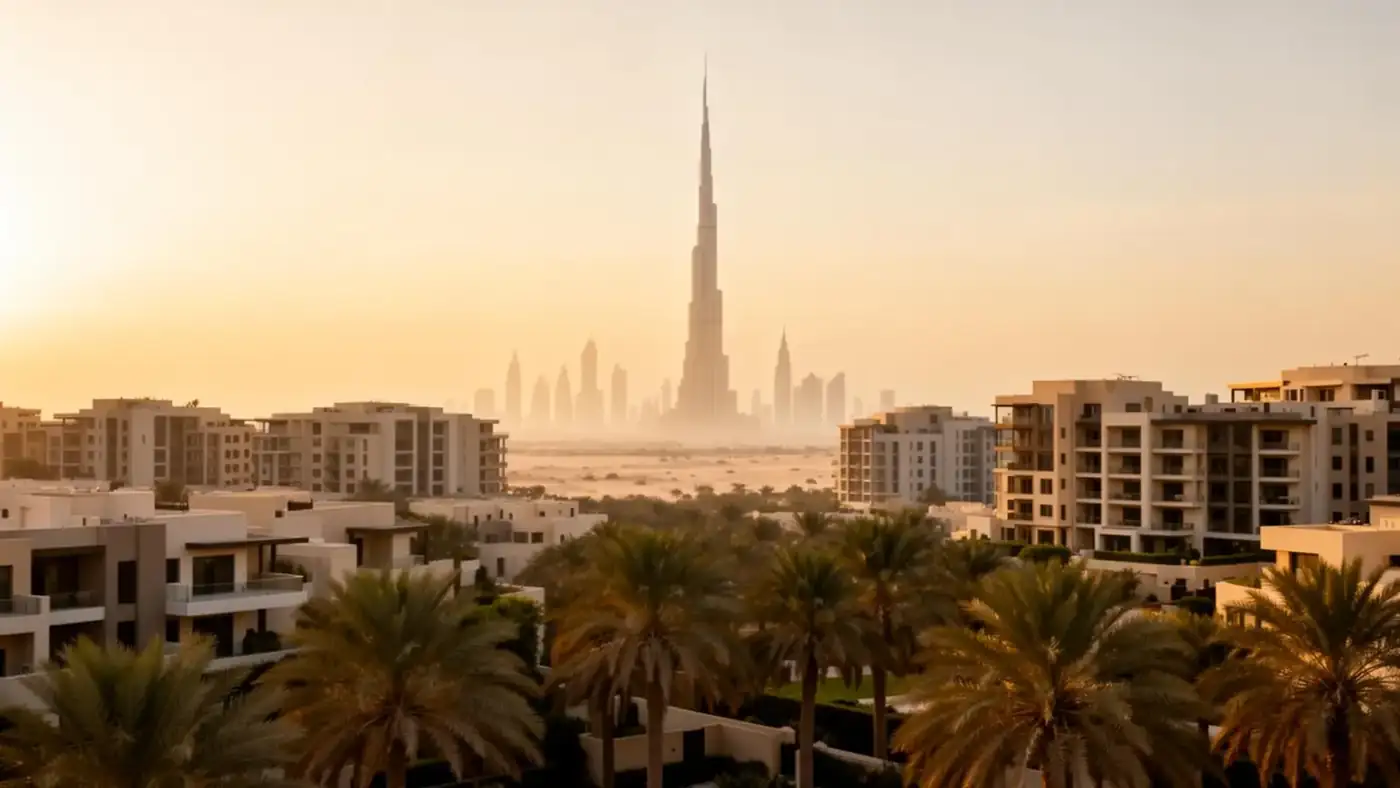
International Schools in Dubai: The 2026 Family Guide
A calm, honest guide for families relocating to Dubai — written for parents who don't yet know what they don't know about United Arab Emirates's school landscape.
Quick Summary
- ·Dubai is one of the most expat-dense school markets in the world, with 230+ international schools regulated by KHDA — every school is publicly rated, which removes a huge amount of guesswork for relocating families.
- ·British and IB curricula dominate. American, Indian (CBSE/ICSE), French, German and Japanese options are all available, often within a 20-minute drive of major expat neighborhoods.
- ·Tuition spans roughly $4,000 to $30,000+ per year, plus registration, assessment, books, transport and uniforms — budget realistically with a 10–15% buffer.
- ·The school year runs September to June. Top-rated schools fill 12–18 months ahead at popular year groups; mid-tier schools usually have rolling availability.
- ·Where you live changes everything: Arabian Ranches, Dubai Hills, Jumeirah, Downtown and Mirdif each have very different school catchments and commute realities.
- ·InternationalSchools.org sends a shortlist first. We only share your details with the schools you approve, so they reach out directly — not the other way around.
Why families relocate to Dubai
Dubai is consistently ranked among the world's leading destinations for relocating families. Tax-free income, year-round sunshine, world-class healthcare, low crime, and an unusually deep international school ecosystem make it a default consideration for globally mobile professionals across finance, tech, energy, consulting and entrepreneurship.
Tax-friendly household economics
No personal income tax means more of your salary funds school fees, housing and travel. This is the single biggest reason families with school-age children choose Dubai over comparable European or APAC postings.
Employer ecosystem
Major multinationals run regional headquarters from DIFC, Internet City, Dubai Hills Business Park and JLT. Spousal employment is realistic, and dependent visas are straightforward when sponsored by an employer.
Healthcare and safety
Mandatory private health insurance covers most expat residents. Hospitals and pediatric care are world-class. Personal safety is consistently rated among the highest globally — important context for families with teenagers.
Travel hub
Dubai International Airport connects to virtually every major city within 8 hours. Holiday homes, grandparents' visits, and quick European or Asian breaks are far more practical than from most other expat hubs.
Outdoor and lifestyle
Beaches, desert reserves, indoor sports, marinas and well-designed family neighborhoods give children a genuinely active outdoor childhood — albeit organized around the summer heat.
English as default
English is the default language of business, schooling and most daily life. Arabic is taught in schools but families don't need to learn it to navigate day-to-day living.

Families like yours land in Dubai every month
Most arrive juggling a relocation, a new job, and a school search at the same time. A real person at InternationalSchools holds the school side for you — so the rest of the move feels lighter.
The international school landscape in Dubai
Dubai's international school sector is the densest in the world relative to population. The Knowledge and Human Development Authority (KHDA) regulates and inspects every private school in the emirate. Each school receives a public rating — Outstanding, Very Good, Good, Acceptable, Weak, or Very Weak — published openly on the KHDA website. This level of regulator transparency is rare globally and makes Dubai unusually navigable for relocating parents.
Roughly 230 private schools deliver 17 different curricula. The five largest are British (UK National Curriculum, IGCSE, A-Level), International Baccalaureate (IB), American (Common Core, AP), Indian (CBSE and ICSE), and the UAE Ministry of Education curriculum. French, German, Japanese, Pakistani, Filipino, Iranian and Russian schools also exist for specific national communities.
Importantly, public ratings should be read with nuance. A school rated Good with strong pastoral care may be a far better fit for a sensitive 9-year-old than an Outstanding school known for high academic pressure. Inspection reports describe school culture, leadership, inclusion provision and student wellbeing in detail — they're worth reading in full before any school visit.
Schools cluster geographically. Communities like Dubai Hills, Arabian Ranches, Jumeirah Village Circle, Mirdif and Jumeirah have multiple schools within a short commute, while newer developments such as MBR City and Tilal Al Ghaf are gaining school capacity quickly. School bus routes typically determine how 'commutable' a school feels — even a 12 km drive can be 45 minutes in morning traffic.
Which curriculum suits your family?
Curriculum choice in Dubai is largely a question of where your child's secondary years will land — and where they'll likely apply to university. For globally mobile families, IB and the British system are the most portable; American suits families with US university intentions; Indian curricula deliver excellent value-for-tuition for families likely to repatriate.
| Curriculum | Best for families who… | University recognition | Notes |
|---|---|---|---|
| British (UK) | Families likely to apply to UK or Commonwealth universities, or move between British international schools. | IGCSEs and A-Levels recognised globally — strong for UK, Australia, Canada, Singapore, Hong Kong applications. | Largest curriculum in Dubai by school count. Easy continuity if you've come from a British system school. |
| IB (International Baccalaureate) | Families wanting a globally portable diploma and broad curriculum across sciences, languages and arts. | IB Diploma accepted by virtually every major university worldwide; valued by selective US and European institutions. | Demanding but balanced; strong for genuinely globally mobile families. Fewer schools than British, but several Outstanding-rated. |
| American | Families targeting US universities or returning to US-curriculum schools after Dubai. | High School Diploma plus AP courses widely accepted; transcripts portable within US system. | Concentrated in a smaller number of large schools, often with strong sports programmes. |
| Indian (CBSE / ICSE) | Indian families repatriating, or those prioritising STEM rigor at a lower fee point. | Excellent for Indian universities and competitive STEM admissions globally. | Significantly lower tuition than other curricula. Many CBSE/ICSE schools are large and well-rated. |
| French, German, Japanese, others | Families maintaining a national curriculum to repatriate or attend universities in that country. | Valued within their respective national systems and across Europe. | Smaller schools, often single-campus; usually limited spaces and need-based admissions. |
Honest tuition expectations
Annual fees in Dubai vary widely by school tier and curriculum. The figures below are headline tuition — there are almost always additional costs you should plan for.
- Entry tier (CBSE/ICSE & value schools)$4,000 – $9,000Strong academic rigor at lower cost; large class sizes; usually well-rated within Indian-curriculum schools.
- Mid tier (Good-rated British/American)$10,000 – $18,000Good range of facilities and pastoral care; often newer or community-focused schools.
- Premium tier (Very Good / Outstanding British, IB, American)$18,000 – $28,000Established reputations, strong university destinations, larger campuses, broader extracurriculars.
- Elite tier (top-tier IB / British)$28,000 – $40,000+Often international brand-name schools (e.g. Repton-style, Sunmarke-style). Selective admissions.
- · Registration fee (AED 500–1,000) per application
- · Assessment fee (AED 250–500), payable per school you assess at
- · Re-registration / annual seat-holding fee (5% of fees, capped)
- · Books, devices and consumables (AED 1,500–4,000/year)
- · Uniforms (AED 800–1,800/year)
- · School transport bus (AED 6,000–11,000/year)
- · Lunch programmes if not packed (AED 4,000–7,000/year)
- · Trips, exam fees, extended-day clubs (variable)
- · Capital levy or building fund at some schools (one-off)
When to apply — and what to prepare
Most Dubai schools open applications 12 months before entry. The most popular schools fill at the 'pinch points' (FS1/FS2, Year 1, Year 7) up to 18 months early. Mid-year transfers are common because expat families rotate constantly — but you'll have far more choice if you start early.
- 12+ months outShortlist & researchRead KHDA inspection reports for the schools that match your child's stage, language needs and curriculum. Aim for 5–8 schools spanning two tiers. Apply to several — wait-list dynamics in Dubai reward optionality.
- 9–12 months outSubmit applicationsMost schools accept applications via online portal with a registration fee. Provide last 2 years of school reports, passport copies, Emirates ID (if relocated), and recent assessments.
- 6–9 months outAssessments and interviewsYounger years typically have a play-based observation. Year 3+ usually have CAT4 or in-house assessments. Year 7+ may include a parent interview and group activity. Most schools offer remote assessments for relocating families.
- 3–6 months outOffers and acceptanceOffers usually arrive with a 7–14 day acceptance window and a non-refundable seat-holding fee (typically 5% of annual tuition). KHDA caps this fee — don't pay above the cap.
- 1–3 months outVisa and onboardingOnce your residence visa is processed, schools complete enrolment via the KHDA student transfer system. You'll receive uniform lists, transport allocation, and the parent app onboarding.
- Mid-year alternativeJanuary startMany schools accept mid-year intake in January, particularly Year 1, Year 7 and high school years. Useful if your relocation timing slips.
Neighborhoods most expat families consider
Where you live in Dubai dictates which schools are realistic, how long the morning bus run will be, and what after-school life looks like. Below are the most common expat-family neighborhoods grouped by character, with the schools families typically consider from each.
Established villa communities with mature landscaping, community pools, and a calm suburban feel. Popular with families who want space and a 'compound' lifestyle.
Newer master-planned villa and townhouse communities with a central park, golf course and excellent retail. Strong recent infrastructure investment.
Beachside heritage neighborhoods with low-rise villas, walkable streets and access to the coast. Premium pricing reflects location.
High-rise apartment living for families who prioritise walkability to work, restaurants and the metro over villa space.
Mid-priced apartment and townhouse communities popular with mid-career families. Newer schools opening in JVC reduce commute pressure.
Older established villa neighborhood with strong value-for-money and a more local feel. Popular with families seeking quieter, school-rich communities.
Beyond the school: relocation basics
The notes below are general orientation, not legal or tax advice. Always confirm current requirements with official government sources.
Visas and dependents
Most expat families enter on an employment visa sponsored by the working parent's employer, with dependents (spouse, children) added as residence visa holders. Process takes 2–8 weeks. The Golden Visa offers 10-year residency for select professionals, investors and outstanding students. Confirm requirements with the General Directorate of Residency and Foreigners Affairs (GDRFA).
Healthcare
Health insurance is mandatory for all Dubai residents and is usually provided by the employer, including dependents. Networks vary — confirm your provider's hospital network covers pediatric specialists and your preferred maternity hospital before signing housing leases.
Housing
Annual rent is typically paid in 1–4 cheques upfront. Most expat families lease via a real-estate agent (Dubai-licensed RERA). Compare service charges, district cooling fees, and whether the home is chiller-free (utility-included) before committing.
Banking and salary
You'll need an Emirates ID before opening most resident bank accounts. Salaries are paid via the WPS system. Many expat families maintain an offshore account for international transfers and education savings.
Schooling logistics
Once an offer is accepted, the school issues a 'Transfer Certificate' request through the KHDA system. Bring attested birth certificates, attested previous school reports (UAE attestation can take weeks — start early), and your child's full vaccination record.
Driving
Most expats can convert their existing licence (UK, US, EU and many others) for AED 1,000 plus an eye test. The school run typically requires either a private car or a paid school bus subscription — public transport reaches few schools.
Common mistakes families make in Dubai
- Applying only to top-tier schools and being left without a place — apply to a tier of 'safety' schools too, especially at peak entry years.
- Underestimating commute. A 12 km drive can be 45 minutes in morning traffic; always test the route at 7:30am before signing a lease.
- Paying a non-cap-compliant 'seat-holding' fee. KHDA caps this — refuse anything above the public cap.
- Choosing a school based on KHDA rating alone without reading the inspection report. Two Outstanding schools can have very different cultures.
- Forgetting to attest documents. UAE-attested birth certificates and academic reports take weeks; start the moment you decide to relocate.
- Confusing 'September intake' with 'now-open enrolment'. Many top schools close their main intake by January or February of the entry year.
- Buying a home before confirming a school place. Lease first; the housing market is liquid enough to optimise around school location once your child has an offer.
- Underbudgeting. Total cost of education in Dubai is typically 25–35% above the headline tuition figure once transport, books, trips and uniforms are added.
Tell us what your family needs in Dubai
Reviewed by a real person. Within 2 business days you'll receive a curated shortlist, and — per the consent you give on the form — we share your details with those shortlisted schools so they can contact you directly.
Your Dubai school shortlist, made for your family
Tell us what you're looking for — we'll send a tailored shortlist. Free for families.
International schools in Dubai — frequently asked
Reviewed by the InternationalSchools editorial team
International education advisors with on-the-ground experience across Dubai's KHDA-regulated school sector. Last verified May 2026. We refresh this guide quarterly.