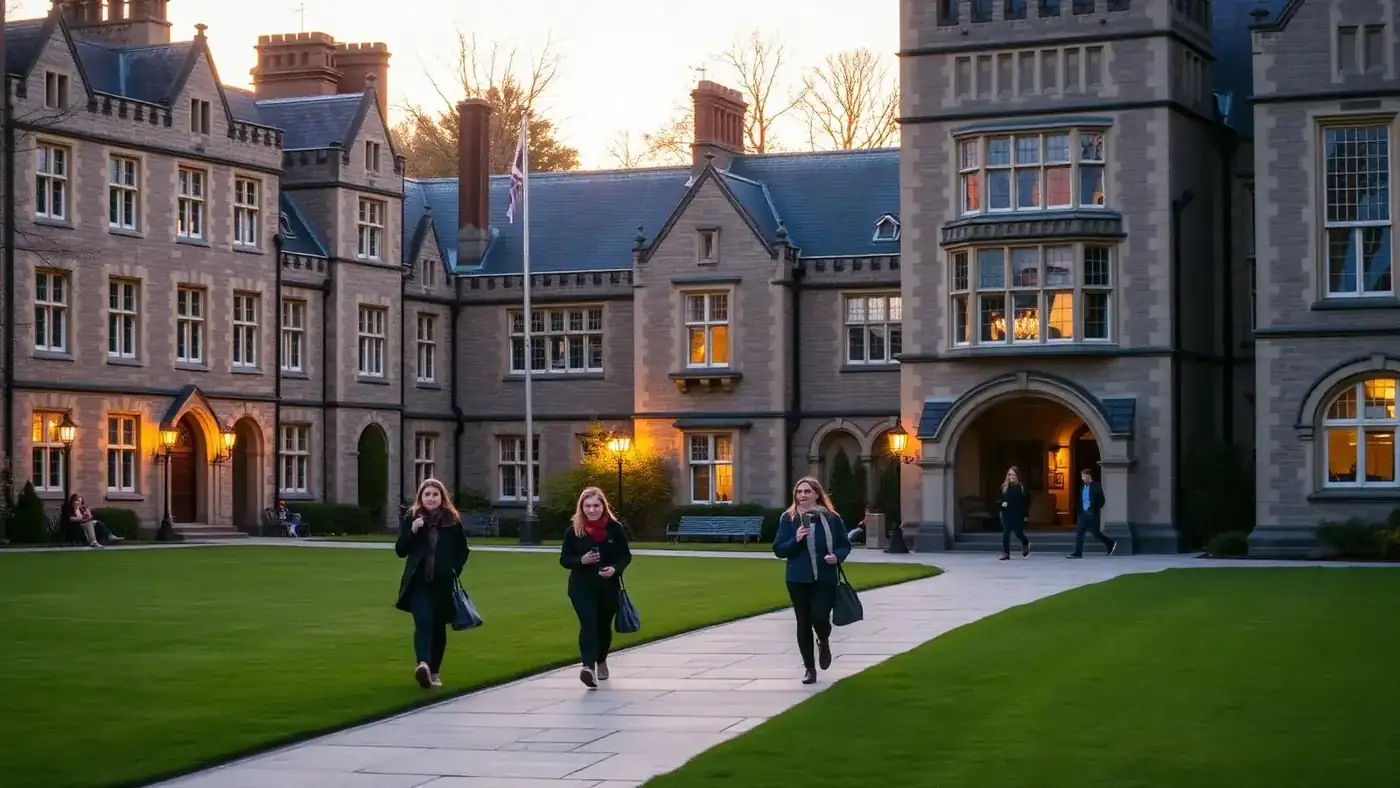
International boarding schools: a calm, honest guide for families
Boarding well done is transformational; boarding badly chosen is painful.
Quick Summary
- ·International boarding schools cluster in Switzerland, the UK, the US and a small number of Asian markets, each with distinct culture and pricing.
- ·Boarding well done is transformational for the right child; boarding badly chosen is one of the most painful decisions a family can make.
- ·Full boarding, weekly boarding and flexi-boarding are different products, pick the model that fits the family, not just the school.
- ·Top international boarding fees range from USD 50,000 to over USD 150,000 per year all-in (Switzerland), with strong UK boarding at USD 50,000–80,000.
- ·Pastoral care, houseparent quality and weekend programmes matter more than academic rankings, they define your child's daily life.
What the Boarding curriculum actually is
International boarding means a child lives at school during term time. Beyond that, models vary enormously, and so do fees, culture and outcomes.
The three core models: full boarding (every weekend on campus), weekly boarding (home Friday to Sunday), and flexi-boarding (a mix of boarding and day, usually for younger or transitional students). Many schools blend all three; the published 'boarding' label often hides which model dominates.
Geographically, four boarding markets dominate: Switzerland (the most expensive globally, IB and bilingual leaning), the UK (the deepest market with hundreds of options across price tiers), the US (large campuses, strong sport and arts), and a smaller set of strong Asian options including Singapore, Hong Kong and Malaysia.
Boarding is not the same as 'expensive school with a dorm'. The best boarding schools build genuine residential communities, house systems, pastoral structures, weekend programming, university counselling, mental-health support, that day schools simply can't replicate.
How the programme is structured
Smaller boarding schools (UK prep schools, Swiss junior options). Fewer in number but well-established for younger children.
The dominant model. UK boarding typically starts at Year 9, US boarding at Grade 9. Switzerland mostly accepts from age 11–13.
Two-year programmes for A-Levels, IB DP or US High School Diploma. Common entry point for international students new to boarding.
Boarders go home each weekend. Practical for families based in the same country or close enough to travel.
Some nights boarding, some at home. Used as transition into full boarding or for families managing complex schedules.
Music conservatoire schools, sport academies, performing arts schools, niche routes that combine boarding with elite training.
Who Boarding suits, and who it doesn't
- · Children who genuinely want to board, pressured boarders rarely thrive.
- · Families on long postings or constant relocations who want continuity for their child.
- · Students who'd benefit from immersion in a structured peer environment with strong pastoral support.
- · Children pursuing elite-level sport, music or performing arts where day schools can't match the facilities or schedule.
- · Sixth-formers preparing for university who want a more independent, residential experience.
- · Younger children (under 11) without strong homesickness resilience and a stable existing peer network.
- · Families using boarding primarily as a logistics solution, children sense it.
- · Students with significant mental health, learning support or medical needs that residential schools may not adequately resource.
- · Families on tight budgets, international boarding is consistently the most expensive school product available.
What it actually costs
Boarding fees scale dramatically by country. Switzerland is the global ceiling; the US and UK occupy the upper-mid range; strong Asian options sit between USD 30,000 and 70,000.
Swiss boarding (Le Rosey, Aiglon, Institut auf dem Rosenberg, Beau Soleil, Brillantmont) ranges from CHF 90,000 to CHF 160,000+ per year all-in. This includes accommodation, all meals, most extracurricular trips and weekend programming. They are deliberately positioned at the global premium tier.
UK boarding spans a much wider range. Top-tier boarding (Eton, Harrow, Winchester, Wycombe Abbey, Cheltenham Ladies') runs GBP 50,000–60,000 annually. Strong but less famous boarding (USD 35,000–55,000 equivalent) is widely available. Smaller regional boarding schools can be considerably less.
US boarding (Phillips Exeter, Andover, Choate, Lawrenceville, Hotchkiss) typically runs USD 60,000–75,000 with significant need-based aid available, many top US boarding schools are well endowed. Asian boarding (UWC SEA, Marlborough Malaysia, Epsom Malaysia, Harrow International) sits USD 30,000–60,000 depending on board.
Add-ons to plan for: guardianship fees (UK), travel home for exeats and holidays, sport tour costs, ski weeks (Swiss schools), and orthodontic / medical insurance. The 'all-in' number is rarely just tuition.
University and life outcomes
International boarding graduates concentrate at selective universities. The pastoral and residential infrastructure means university counselling is usually significantly stronger than at day schools.
UK boarding feeds heavily into Russell Group universities, Oxbridge, and increasingly into top US universities, the boarding network supports complex multi-country applications well. Swiss boarding sends graduates across US, UK, European and Asian universities, often with deliberate global diversification.
US boarding has the most developed university counselling infrastructure of any school sector globally. Counsellor-to-student ratios at top US boarding schools sit at 1:25 or better; many counsellors are former admissions officers themselves.
Beyond university entry, boarding alumni report higher self-rated independence, time management and tolerance for diverse roommates and peer groups. The trade-offs are real, homesickness, distance from family during difficult moments, and reduced family time during the formative teenage years.
Choosing a Boarding school well
Visit during a normal weekend
Open days hide what weekends actually look like. The reality of dorm life, weekend trips and pastoral cover is the real product.
Meet the houseparents
Houseparent quality and continuity is the single biggest variable in your child's wellbeing. Long-tenured houseparents are gold.
Ask about pastoral and mental-health resourcing
Number of full-time counsellors, doctor and nurse cover, GP and dentist arrangements, sleep policy, phone policy. Ask in numbers, not adjectives.
Check the boarding/day ratio
Schools that are mostly day with a small boarding house feel different from full boarding schools. Both can be excellent but they're very different products.
Understand the weekend programme
What happens Friday night to Sunday afternoon defines boarding life. Quality schools publish weekend programmes; weaker ones leave it ad hoc.
Talk to current parents in their first year
Recently joined families have the most honest perspective. Long-standing families are often too embedded in the school identity to see clearly.
Where Boarding schools are strongest right now
Each guide below is a deep, honest read on the local Boarding landscape, fees, regulators, neighborhoods, and admissions timing.
Compare IB, British and boarding schools in Switzerland. Tuition, lakeside vs alpine campuses. Free human-reviewed shortlist by a real specialist.
Compare independent and international schools in London. 11+/13+/16+ entry, IB vs A-Levels, fees. Free human-reviewed shortlist by a London specialist.
Compare IB, British and American schools in Singapore. Tuition, waitlists, neighbourhoods. Free human-reviewed shortlist by a real Singapore specialist.
Compare ESF, IB, British and American schools in Hong Kong. Debentures, Mid-Levels, Sai Kung. Free human-reviewed shortlist by a specialist.
Compare British, American and IB schools in Kuala Lumpur. Mont Kiara, Bukit Bintang, fees. Free human-reviewed shortlist by a KL specialist.
Common mistakes families make with Boarding
- Choosing the famous name without checking whether your child would actually thrive in that specific house and year group.
- Underestimating travel logistics. Three return flights a year (term breaks plus exeats) plus guardianship can add USD 8,000–15,000 to your annual cost.
- Sending a child to boarding 'because the parents had a great time'. Boarding cultures have changed; the child has not consented to your nostalgia.
- Picking on academic results alone. Strong academic boarding with weak pastoral care produces unhappy high-achievers.
- Ignoring the home-leave logistics in conflict-prone or long-haul regions, visa, guardianship and travel reliability matter.
Tell us what your family needs
Reviewed by a real person. You'll receive a curated shortlist of Boarding schools, and, per the consent you give on the form, we share your details with those shortlisted schools so they can contact you directly.
Your International boarding schools school shortlist
Tell us about your child in ~2 minutes. A real person reviews every submission and prioritises families with upcoming school starts.
- Human reviewed
- Global coverage
- Free for families
- Privacy-first
GDPR · consent-based. Your details are only shared with the schools on your shortlist.
International boarding schools, common questions
Honest answers to the things parents most often worry about, timing, fit, privacy, and what happens the moment you hit submit.
- Advisor-reviewed
- Zero spam, opt-in only
- Reviewed by a real person
- Most modern UK boarding now starts at age 11 (Year 7) or 13 (Year 9). Swiss schools typically start at 11–13. The minority of younger boarding (8+) requires strong existing resilience and ideally a sibling or close friend already at the school.
- Different products. Full boarding builds deeper community but reduces family contact. Weekly boarding gives a strong residential experience while keeping family time. Schools heavily weighted to one model deliver that model best.
- Many thrive, but the first term is hard for almost everyone. Schools with a high international proportion and strong EAL and pastoral support produce the smoothest transitions.
- Yes for UK boarding for under-18 international students, a UK-resident guardian is a legal expectation and most schools insist on professional guardianship arrangements. Budget GBP 1,500–3,500 per year.
- Swiss schools tend to be smaller, more international, often bilingual, and more expensive. Weekend programmes are typically more structured (skiing, tours, mountain trips). UK schools are more traditional, exam-anchored and academically stratified.
- Yes at top UK and US boarding (often need-based, sometimes academic, sometimes music/sport). Swiss boarding scholarships are rarer. Apply early, most scholarship pipelines close 12–18 months before entry.
Reviewed by InternationalSchools Editorial
Independent international school guidance team. Last verified May 2026. We refresh this guide quarterly.